
This post could be shortened to a single phrase, but then you will most likely go “somewhere”, burn out, remain without legalization and return in six months (or live in a gray area). You need to go to a place where you can both (a) work and (b) legalize. Everything else is secondary: the sea, vibe, “everyone is there”, “everyone goes there”, “it’s cheap there”. It’s just bait.

If you are looking for a “simple country” and hoping that the documents will “somehow appear”, I have bad news for you: in the real world, legalization is either a job, or study, or family, or investments/capital, or special programs. Choose a country that fits your reality, not your dream.
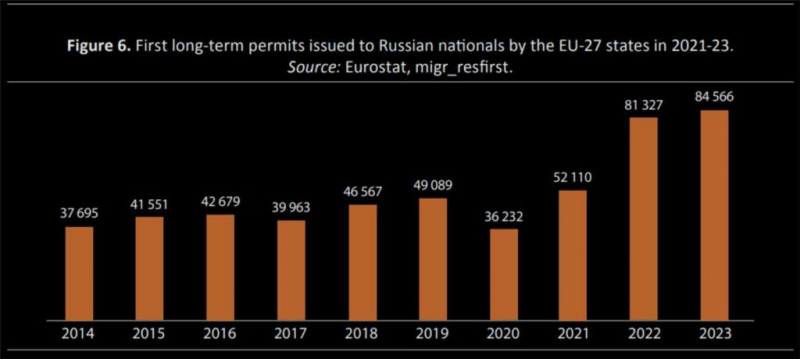
The demand for the topic “where to leave Russia” has been growing for several years: in the EU, the number of the first long-term permits/residence permits issued to Russians increased markedly in 2022-2023 (according to Eurostat, aggregated in the ICDS study). The years 2014-2023 show a sharp acceleration after 2021: 52 110 (2021) — 81 327 (2022) — 84 566 (2023).
At the same time, official statistics on emigration show that flows are “falling and jumping” — and stability cannot be counted on: according to Rosstat (as retold by ICDS), the total emigration rate from the Russian Federation increased sharply in 2022, while the component in the EU-27 there looks relatively small (thousands, not hundreds of thousands).
The short conclusion I have for you here is this: you are not “leaving”, but building a new life as a project. A project without legal status and an understandable economy is not a project, it is a trip with delayed failure.
Disclaimer: the post was written primarily to link subscribers, friends and acquaintances to it, because over the past six months I have been asked about all this in such volumes that were not even in 2022-m.
- Why is this guide without pink snot
- The main principle is to go to a place where you can work and legalize
- What does “I can work” mean
- What does “I can legalize”mean
- Practical plan and checklists
- Five steps to the exit
- The first 2-3 weeks in a new country
- Banks, cards, compliance and “how to transfer money”
- Emigration timeline for 6-12 months
- Countries for realistic relocation: analysis and comparison
- Comparison table
- Short country reviews
- Anti-rating: where not to go and why
- FAQ, checklist and Output
- Frequently Asked Questions
- Print checklist
- Hard output
Why is this guide without pink snot
Most of the “guides” on the Internet are written like a showcase: first they scare you, then they promise “we’ll do everything,” then they carefully lead you to purchase the services of “emigration lawyers.” I’m not a lawyer, and I’m not going to sell you escorts. This is a personal blog, so the tone will be direct: not everyone needs to leave, but if you can, it’s better to leave. I said this long before the war and did not change my mind, even when they twisted my finger at my temple and told me that “it will only get better in Russia” and “there will be no war.”
I left before the war, prepared for emigration for a long time and consciously (ten years is not “breaking down the night after the mobilization was announced”), I considered very different countries — from dreamy options (USA, New Zealand, Australia) to the most applied ones. I currently live in Armenia, and at the same time I am slowly moving towards relocation to Greece on a digital nomad visa (with backup options in the form of Montenegro and Bulgaria).
Since 2022, my emigrant contacts have included people who in the first weeks did not know how to cook everyday things (conditionally: “how to cook oatmeal”), and managers/heads of large companies who thought in terms of “how to legally structure assets and transfers.”
To make it clear that this is not a theory: I have already written on my blog how we settled in Armenia, lived in a hostel, looked for long-term rentals through local sites, and what types of immigrants are found literally in the same hostel kitchen.
The main principle is to go to a place where you can work and legalize
Work and legalization are two legs. You won’t get far on one.
What does “I can work”mean
For 90% of the readers of this guide, this means one of two things:
- Remote/freelance/your online business (ideal because the job is not tied to the local market).
- Offline profession that the market really buys: welder, locksmith, electrician, carpenter, driver, cook, medical staff, repairman, etc. (the bitter truth is: a “university specialty” without a language is often not monetized for the first 6-18 months).
If you’re an IT guy at heart right now, but you don’t actually have the money or the skills, first become someone who earns money, and only then move. Otherwise, you will go into endless stress.
What does “I can legalize”mean
Legalization is a way that can be explained to the border guard, the migration service and the bank so that they do not bat an eye. These are usually:
An example that helps to descend from heaven to earth: in the EU in 2024 3.5 million first residence permits were issued, and the main reason is employment (31.9% of all first permits). That is, even in systems where there are many programs, “work” is still the main engine.
And yes: any promises of “you will come and everything will be fine in a month” are most often marketing. Even when deadlines are formally fast, life adds queues, certificates, apostilles, insurance, waiting for plastic, bank compliance…
Practical plan and checklists
Below is the applied “skeleton” of emigration. It is suitable for both the “poor” and those who “have money.” The only difference is that the rich have less pain with household chores, but more pain with compliance, taxes, and banking issues.
Five steps to departure
Step #1: profession/income. If you already have the remote control, great! If not, decide what you will earn. Offline, betting on a craft often pays off faster than “retraining as a programmer” from scratch.
Step #2: On-site reconnaissance. Come for 1-2 months and live like a local: not a “hotel and excursions”, but rent, transport, medicine, communication. That’s what I did: in Armenia, we first lived in a hostel, then quickly looked for long-term rentals through local services and communicated with those who had already settled.
Step #3: health. To cure what is possible, especially the teeth. As long as you are without stable status and insurance, it can be significantly more expensive and more difficult to be treated in a new country (especially without knowledge of the language).
Step #4: documents. Assemble the “life folder” (originals + copies + digital copies): certificates, diplomas, certificates, powers of attorney (be sure to make a general power of attorney for a reliable person). There is an apostille where it is needed. The meaning of the apostille: it replaces the long consular legalization with a single certificate according to the rules of the Hague Convention of 1961.
Step #5: financial cushion. Money for 3-6 months (minimum). Yes, sometimes people take out loans (especially if you travel on policy) — an adult decision, but it has the right to life if you understand how you will cover them and what to do in case of income drawdown.
The first 2-3 weeks in a new country
The task of the short horizon is to assemble a starter kit: housing, communication, documents, bank card, work.
- Accommodation: search not only through “expat chats”, but also through local platforms and acquaintances. I was looking for a rental in Armenia through list.am (the local equivalent of Avito), and not through storefront services.
- Communication and Internet: SIM card, stable Internet, basic services (without this, you won’t even collect documents properly).
- Registration/address (if required): Many countries link migration and banking processes to an address.
- Migration steps: make an appointment (now it may take a year from the moment of registration to the issue of “plastic”), apply for status, understand the deadlines, collect the missing papers.
- Banks/payment infrastructure: at least one card/account/IBAN (where available), plus a backup plan.
- Work: the first money should arrive quickly. Not the “ideal dream job” (which many have been looking for for years, eating away at a financial cushion), but “something that feeds and stabilizes.”
Banks, cards, compliance and “how to transfer money”
It is important to speak carefully here: I do not give instructions on circumventing laws/sanctions. Any transfers, crypts, and “money movement” must be legal in your situation and in the jurisdictions through which the payment passes.
Key realities:
- Russian Visa/Mastercard cards outside the Russian Federation do not fare well as a class after March 2022. The network has officially suspended operations in Russia.
- There are restrictions in the EU that affect banking accessibility for Russians/residents of the Russian Federation. For example, one of the sanctions packages formulated a rule prohibiting accepting deposits in excess of 100,000 euros per customer in one bank (with nuances and exceptions). Practical meaning: you may encounter that the bank asks a lot of questions or refuses “on compliance,” even if you “just want an invoice.”
- A crypt with passed KYC. It’s not a magic wand, but without KYC, you often won’t be able to properly verify the origin of funds and use the crypta—bank bridges. I consider it mandatory to have a pre-prepared, clean, documented crypto profile (and an understanding of the tax implications in the country of residence).
The correct logic is: first, the status and documents, then the bank trace (history), then large transfers. And there is always a paper trail: contracts, invoices, statements, confirmations of the source of income.
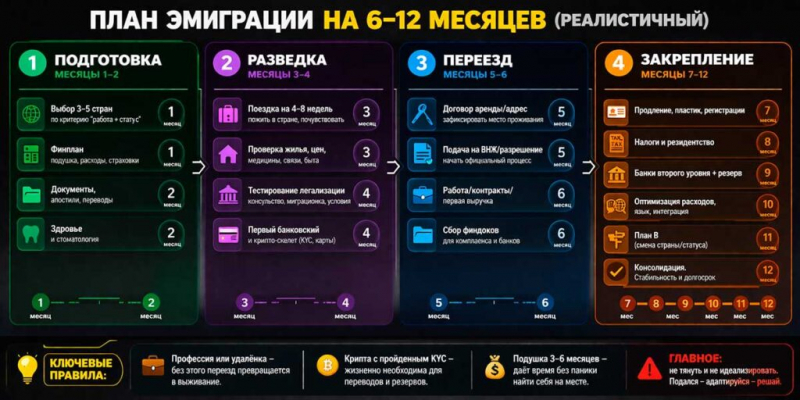
Emigration timeline for 6-12 months
Countries for realistic relocation: analysis and comparison
Below are the countries that I was personally asked about and that I was considering moving to, plus those that are consistently in demand from the Russian—speaking audience (especially remote workers): Georgia, Serbia, Portugal, Spain, the United Arab Emirates.
First, a comparative frame, then short comments on “who is suitable/who is not”.
I take the cost of living, security, and medical indexes from Numbeo for 2026 (important: these are crowdsourced indexes — use them as a guideline, not as ready-made accounting).
Comparison table
Abbreviations:
- CoL — Cost of Living Index.
- Safe — Safety Index.
- HC — Health Care Index.
| Country | Visa Routes (core) | Legalization (subjective) | Remote | Low-grade job /qualification | CoL | Safe | HC | Language barrier | Digital nomad friendly | Banks/crypt (practice) |
|---|---|---|---|---|---|---|---|---|---|---|
| Armenia | Residence permit: work/study/family; start — entry without bureaucracy | High for a start, medium for “long and stable” | Yes | Medium/limited | 40.9 | 77.9 | 59.5 | Low–medium (Russian often helps) | Rather, “yes” in fact | It’s usually easier than the EU, but compliance is still there |
| Kazakhstan | EAEU: work under contract; TRP/registration | High (especially for the EAEU) | Yes | Average/average | 29.8 | 54.8 | 60.7 | Low–medium | Neutral | Banks are often available, but the rules change |
| Argentina | Digital nomad (180 days); “rentista”; work | Average (timing/inflation/processes) | Yes | Low/Medium | 41.3 | 36.8 | 67.8 | High without Spanish | Yes (formally there is a way) | Banks and currency rules may be specific |
| Cyprus | Cyprus Digital Nomad; study; work | Medium–high (but strict compliance) | Yes | Limited/medium | 58.8 | 66.7 | 56.7 | Average | Yes | Banks are stricter because of the sanctions background |
| Montenegro | Temporary residence >90 days for purposes; visa not required for 30 days | Average (a lot of “paper” routine) | Yes | Limited/limited | 42.7 | 65.6 | 47.4 | Average | Rather “neutral” | Banks can be capricious |
| Turkey | Residence permit (ikamet) of different types; work through a permit | Average (rules can be “twisted”) | Yes | Average/average | 39.2 | 58.5 | 71.3 | Medium–high | Neutral | Banks/cards are often solved, but compliance is growing |
| Vietnam | E‑visa up to 90 days; then — work/other statuses | Low for “stay forever”, medium for “live” | Yes | Low/limited | 26.4 | 59.9 | 62.2 | High | More like a lifestyle | Banks and legalization for work are more difficult |
| Thailand | DTV (workcation); LTR (for the “strong”); others | Average (if you meet the criteria) | Yes | Low/Limited | 38.0 | 63.4 | 77.5 | Medium–high | Yes (there are visa products) | Banks are more often ok with the status |
| Georgia | Visa—free for up to 1 year; further – residence permit on the grounds of | High for a start, medium for “consistency” | Yes | Low/medium | 33.1 | 73.8 | 56.3 | Low–medium | “Actually yes” | Banks: often the most painful point |
| Serbia | For Russians 30 days without a visa; further — long-term visa/residence permit | Average | Yes | Average/average | 42.6 | 63.0 | 52.1 | Average | Neutral | Banks are usually better than in the EU, but there is compliance |
| Portugal | Trabalho remoto/nómada digital visa; Residence permit through AIMA | Average (queues/deadlines), but the way is clear | Yes | Low/medium‑high | 48.8 | 67.0 | 72.0 | Average | Yes | Banks strictly according to documents/sources |
| Spain | Telework/Digital nomad: 1 year visa or Residence permit for up to 3 years | Medium–high (or difficult without docks) | Yes | Low/High in qualifying | 51.6 | 62.4 | 77.2 | Medium–high | Yes | Banks are strict, the sanctions background affects |
| UAE | Remote work/virtual work; residence in the emirate | High with income | Yes | Low/Medium | 55.2 | 86.0 | 70.8 | Average (English is often ok) | Yes | Banks are ok with compliance, taxes for individuals = 0% |
| Greece | Digital nomad visa (D) + residence permit; other grounds | Average (income/docks/terms) | Yes | Low/Medium‑high | 54.0 | 53.8 | 58.9 | Medium–high | Yes | Banks are strict, EU restrictions are important |
Short country reviews
Armenia. To start with, it is one of the most “entrance” countries: a minimum of bureaucracy at the entrance and a strong “get back on your feet quickly” effect. To apply for temporary resident status, you need standard things (an application, a photo, a passport with a notarized translation, a health certificate, etc.), and the grounds are individual entrepreneur/work/study/family. If you are a remote worker and you need an “intermediate harbor” to collect documents/money/nerves, this is a working strategy.
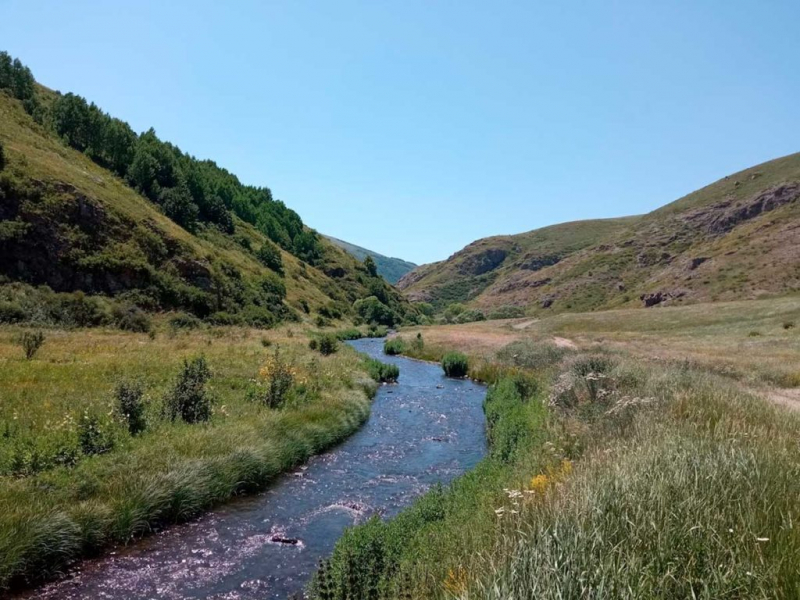
Kazakhstan.A big plus is the Eurasian context: according to eGov, citizens of the EAEU (including the Russian Federation) can work under an employment contract without a separate work permit. This makes the country a pragmatic choice for those who are going to “earn with their hands” or quickly look for an offline job.
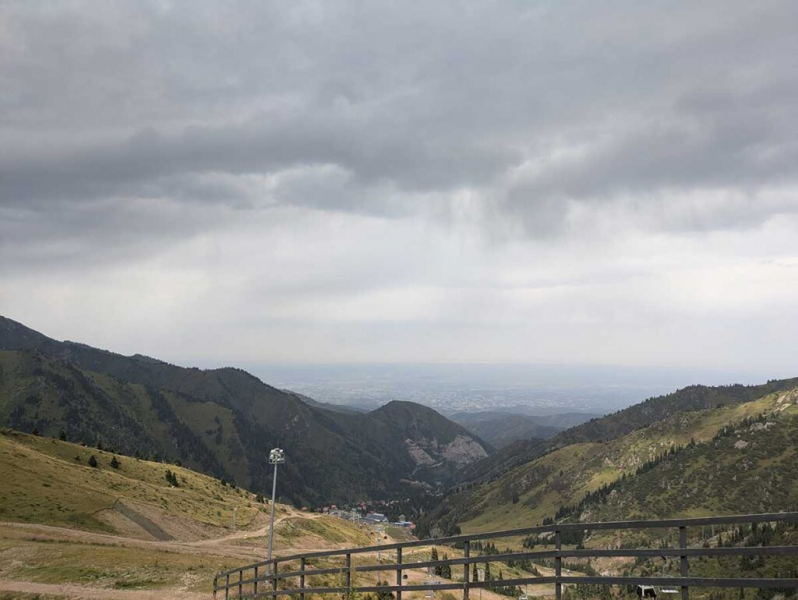
Argentina. It is interesting for remote workers that consulates already have a published “digital nomad” logic, such as remote work with a stay of up to 180 days. Plus, the official government portal explicitly emphasizes that migration procedures are “simple and personal” and do not require intermediaries (which is rare for the state text and fits well with the mood of this post). The disadvantages are security (at least focus on indexes), currency features, and the language barrier.
Cyprus. Officially, the Cyprus Digital Nomad Visa scheme is again accepted by migration authorities. But this is the EU, which means that banks and inspections will be stricter, and sanctions restrictions are a compliance practice.
Montenegro. According to the government, Russian citizens can stay without a visa for up to 30 days, and temporary residence is given for specific reasons if they intend to stay for more than 90 days. It works well for lifestyle and remote, but don’t think that “everything is easy there”: paper routine and local rules consume resources. Previously, it was easy to make a zero company, but now the requirements are getting tougher.
Turkey.The official pages of the migration service describe the types of residence permits (ikamet) and the logic of “longer than 90 days — you need a residence permit,” as well as the basic framework of the law. Official sources confirm that there are types of work permits and a separate procedure linked to labor grounds. Turkey often turns out to be a “country of compromise”: you can live fast, but “the rules can move.” There is an option for a quick passport through the purchase of real estate from $ 400,000, but you need a competent consultant there.
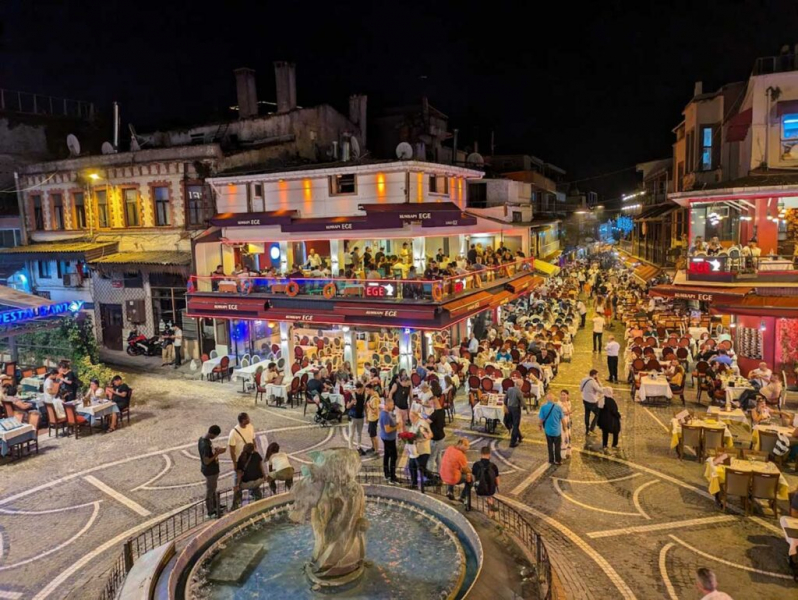
Vietnam.The official e‑visa portal talks about e-visa for up to 90 days (single/multiple), and this makes Vietnam convenient for long-term “exploration” and wintering. But if the goal is not to “live”, but to “gain a foothold”, you will almost inevitably need a job/employer/permit — and this is another level of complexity.
Thailand. Thailand has more customized products for remote access: for example, Destination Thailand Visa (DTV)For workcation/remote worker, it is directly described on the Thai consulate’s page. For “strong” profiles, there is an LTR program run by BOI. But it’s not okay to purchase real estate, so that’s an option.
Georgia.The official page of the Ministry of Foreign Affairs of Georgia indicates the possibility to stay up to 1 year without a visa (according to the list of countries/regimes). This is a classic “quick login” for remote workers. But be mentally prepared: the banking issue may become the most difficult element, not the migration one. Well, they might just not let me back in after the visa, like me.
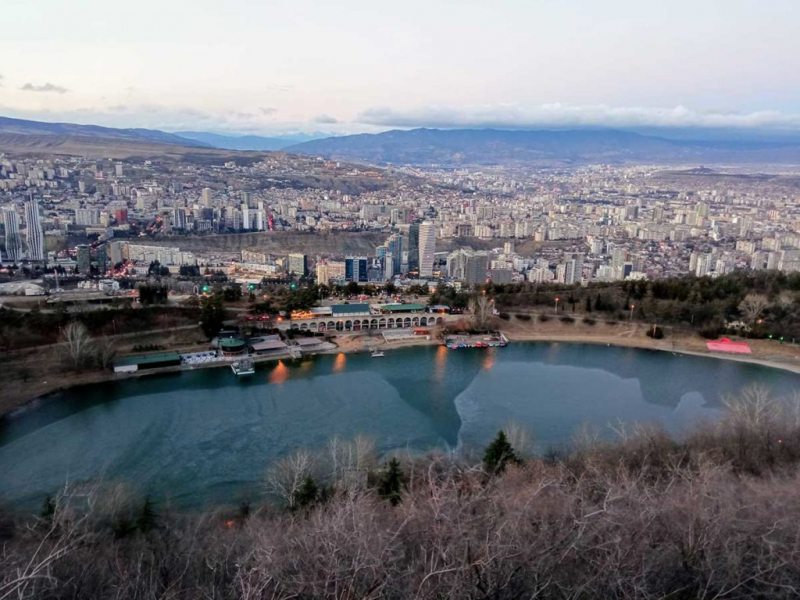
Serbia. According to the Serbian Foreign Ministry, a visa-free regime of up to 30 days is in effect for ordinary Russian passports. Then the “normal Europe outside the EU” begins: residence permit/grounds/contracts. For many, this is the “working middle ground” between the Caucasus and the EU.
Portugal. The type “trabalho remoto/nomada digital” is directly highlighted on the official visa portal. And the migration agency AIMA publishes a residence permit framework for remote activities: a list of documents and a validity period of 2 years with an extension of 3. This is not “quick and easy”, but it is “understandable and systematic” — which is more important for a long-term project.
Spain. The consular pages and the PRIE state portal describe the telework/digital nomad mode: requirements for relations with an employer, the “visa vs residence permit” format, and deadlines (1 year for a visa, up to 3 years for a permit when applying from the inside). High taxes, but you can leave them as a backup option.
UAE. The UAE has official pages for “virtual work/remote work residence”: requirements for remote employment and income (often at least $3,500/month), plus documents (passport, photo, insurance). Separately: the official government platform explicitly states that The UAE does not levy income tax on individuals (there is a 5% VAT and other taxes/fees). Make allowances for the weather and the specifics of government.
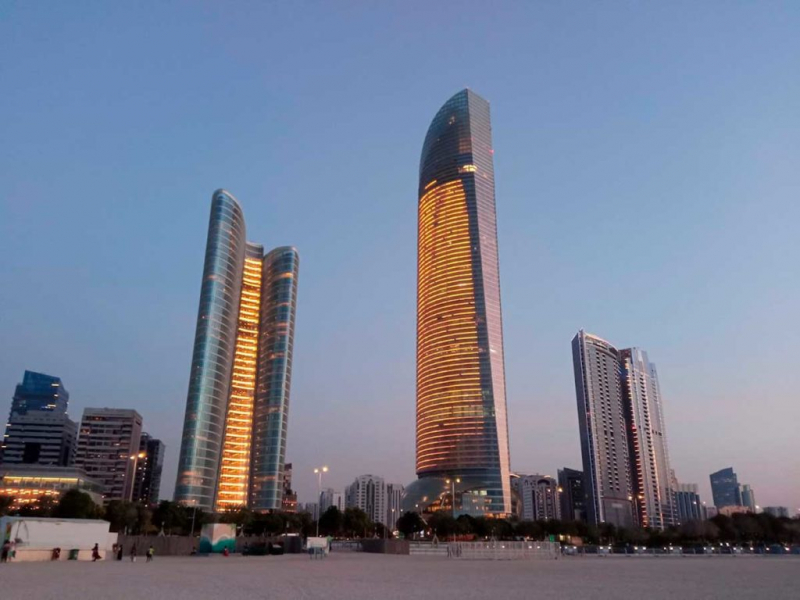
Greece. There is a digital nomad visa for her: according to Work From Greece (which the Ministry of Foreign Affairs refers to), the income requirement is from €3,500 “after taxes” for the applicant, with an increase in the threshold per family; fees and the logic of extending through a residence permit are also described.
Anti-rating: where not to go and why
Anti—rating is not because “the country is bad.” It’s just that in your case it will be a dead end.
1. Countries where security/policy rules are being tightened for Russians. An example from official/semi-official EU materials: the report on Latvia describes changes that limited the issuance of the first temporary residence permits to Russian citizens for a number of reasons amid discussions about security risks. Meaning: you can choose a country “based on the picture”, and then run into the fact that your passport becomes not an advantage or a neutral factor, but a problem of the process.
2. Countries where you cannot open a normal financial infrastructure without the status.The EU deposit restrictions for Russians are one of the markers of reality.
3. Dear countries with no clear legal path. If you have no money, no language, no profession — “USA/Canada/Great Britain/Australia” in 99 cases out of 100 remains a fantasy that burns a year of life. Do you want to go there? Super! But then your plan for the year is not “moving”, but “building a profile for immigration.”
FAQ, checklist and output
Frequently Asked Questions
Is it possible to leave if there is almost no money?
You can, but then you have to compensate for the lack of money with two things: (1) a sought-after profession, (2) a country where you can really start working and legalize. In this sense, Kazakhstan is often easier to engineer for EAEU citizens.
Why are you so insistent on legalization?
Because without status, you can’t do basic things normally: rent a house without overpaying, open an account, take out insurance, sign long-term contracts. And also because “in the gray zone” you spend your psyche on fear, not on growth.
Why “exploration” for 1-2 months?
Because emigration is not a theory. In Armenia, I have seen how simple household “cogs” decide everything: where to look for rent, how to communicate with locals, what prices are “for locals”, where to save money, who helps. I lived this stage myself and described it.
About the crypt: is it necessary?
Not “necessary,” but often “very useful.” In 2022, it became obvious that global payment rails could be cut off by company decisions: Visa and Mastercard officially suspended operations in the Russian Federation. Crypto with KYC is one of the tools, but only if you understand the risks, taxes, and legality.
Print checklist
Before departure
- [ ] Profession/income: I understand how I earn in the first 30 days
- [ ] Exploration: Country No. 1 and country No. 2 selected (plan B)
- [ ] Health: teeth/chronicle/prescriptions/statements
- [ ] Documents: collected, digitized, apostille where needed
- [ ] Financial plan: 3-6 months cushion + cost plan
- [ ] Crypto/finance: KYC, backup methods, understanding Taxes
- [ ] Legalization plan: clear “basis” (work/study/family/program), list of documents
After arrival (first 2-3 weeks)
- [ ] Housing: temporary — long-term (local sites)
- [ ] Communication/Internet/address
- [ ] Migration steps: recording, filing, deadlines, list of missing papers
- [ ] Bank trace: at least one clear tool + reserve
- [ ] Work: first money and a provable income
- [ ] Community: find those who arrived earlier and know “where is cheaper/faster/more reliable”
Hard conclusion
If you’ve read to the end and still want a “universal country” that is cheap, secure, provides documents quickly, opens bank accounts without questions, treats your teeth for free and smiles at you at the border, there is no such country.
The options are as follows:
- If you are a delayer, you have real options: Greece/Spain/Portugal through remote workers’ visas (if you pass by income and documents).
- If you have no money, but you have your hands full, look to where it is easier to legally work and live at the start (Kazakhstan/Armenia as the “first step”, then — according to plan).
- If you are “with money”, get ready for compliance and the fact that the world after 2022 has become tougher on the origin of funds and passport.
And one last thing: no one will save you in emigration. Neither the country, nor “ours,” nor the chats, nor the lawyer. The only thing that saves is the ability to work, legalize, and stick to a plan when you want to quit and leave.